
Microprocessor KAFO (Powered Knee-Ankle-Foot Orthosis) in NYC
by
Gramercy Physical Therapy
A Microprocessor KAFO (MP-KAFO)—also known as a powered or active Knee-Ankle-Foot Orthosis—is one of the most advanced forms of lower-limb bracing available today. Unlike traditional locked or mechanical KAFOs, microprocessor-controlled systems use real-time sensors, onboard electronics, and intelligent control algorithms to dynamically stabilize the knee and support the ankle during walking and standing.
At Gramercy Custom Orthotics & AFO in Manhattan, Microprocessor KAFOs are prescribed for patients with complex knee instability, neuromuscular weakness, and high fall risk who require a level of support that conventional bracing cannot provide.
👉 Learn more about our process here: Custom AFO, Ankle & Knee Braces


What Is a Microprocessor KAFO?
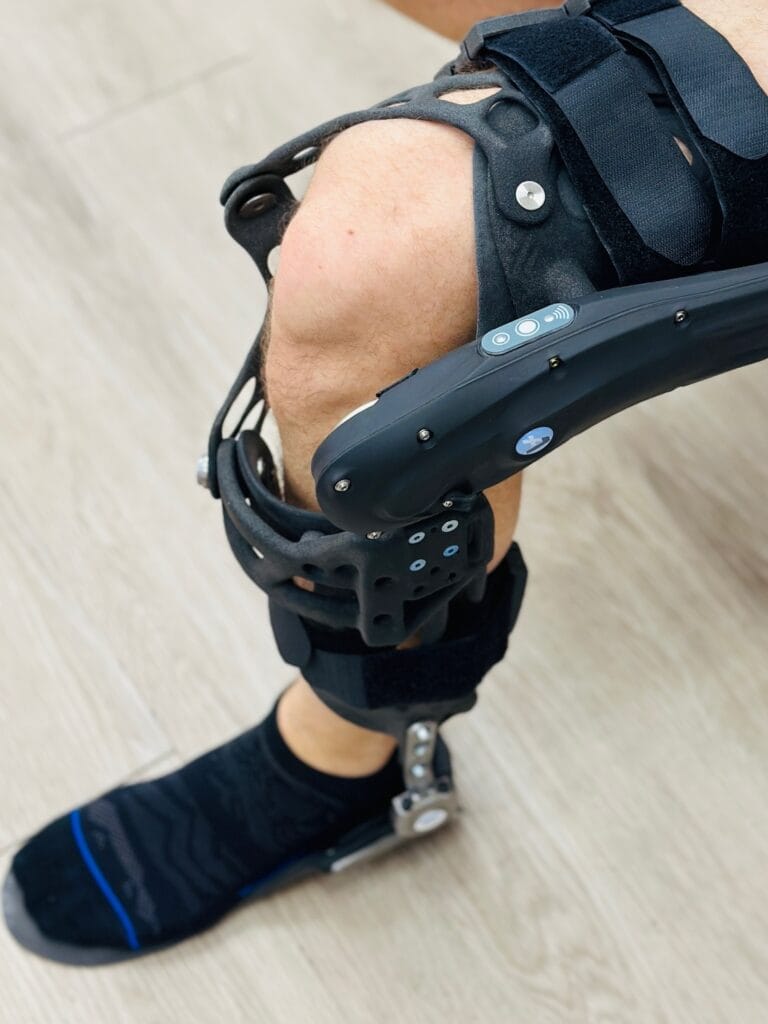
A Microprocessor KAFO is a battery-powered orthotic system that spans the thigh, knee, ankle, and foot, integrating mechanical support with electronic control.
Key components include:
Rigid or semi-rigid thigh and calf shells
A microprocessor-controlled knee joint
An articulated ankle joint with a footplate
Embedded sensors that analyze gait mechanics in real time
The microprocessor continuously interprets movement data—such as limb position, loading response, and walking speed—and automatically adjusts knee stability during each phase of gait. This allows the knee to remain stable during stance while permitting controlled knee flexion during swing.
Step Into Comfort & Stability Today.
Custom orthotics can make a real difference in how you move, feel, and live.
Call (212) 598-5913 or
Contact us
Key Features of a Microprocessor KAFO
Intelligent Knee Stability
The electronic knee unit can lock, unlock, or modulate resistance automatically, providing stance-phase security without forcing the knee to remain locked throughout gait.
Active or Semi-Active Assistance
Depending on the system, the device may:
Assist knee extension during stance
Control knee flexion at initial contact
Reduce sudden knee buckling and instability
Dynamic Ankle Support
Unlike solid AFOs, MP-KAFOs typically include an articulated ankle joint, improving:
Toe clearance
Rollover mechanics
Gait symmetry and efficiency
Lightweight Advanced Materials
Modern Microprocessor KAFOs often use carbon composite frames or 3D-printed structural elements, providing strength, durability, and reduced weight.
Battery-Powered & Programmable
These devices are powered by rechargeable batteries and may include wireless programming, allowing precise customization based on the patient’s gait and functional goals.
How Is a Microprocessor KAFO Different From a Traditional KAFO?
Traditional KAFOs are typically either:
Locked KAFOs, which keep the knee fully extended
Mechanical stance-control KAFOs, which unlock based on basic mechanical triggers
While effective for stability, these designs often lead to:
Abnormal gait patterns
High energy expenditure
Hip hiking and circumduction
Difficulty on stairs, ramps, and uneven surfaces
A Microprocessor KAFO improves upon these limitations by:
Allowing natural knee motion during swing
Automatically adapting to walking speed and terrain
Reducing compensatory movement patterns
Improving safety and confidence
The result is a gait that is more efficient, safer, and closer to normal biomechanics.
Who Is a Candidate for a Microprocessor KAFO?
Microprocessor KAFOs are typically prescribed for patients with combined knee and ankle instability who cannot be adequately managed with an AFO or standard KAFO.
Common indications include:
Severe quadriceps weakness
Incomplete spinal cord injury
Stroke with knee instability and foot drop
Multiple sclerosis (MS)
Neuromuscular disorders affecting stance-phase control
Recurrent knee buckling with high fall risk
These devices are particularly valuable for patients who require stance-phase knee control but wish to regain smoother, more functional walking.
Clinical Benefits of a Microprocessor KAFO
Improved Safety
Real-time knee stabilization significantly reduces the risk of unexpected knee collapse and falls.
Reduced Energy Cost
By eliminating constant knee locking and inefficient compensations, patients often experience less fatigue during walking.
More Natural Gait Pattern
Dynamic knee and ankle coordination improves stride length, cadence, and overall gait symmetry.
Greater Independence
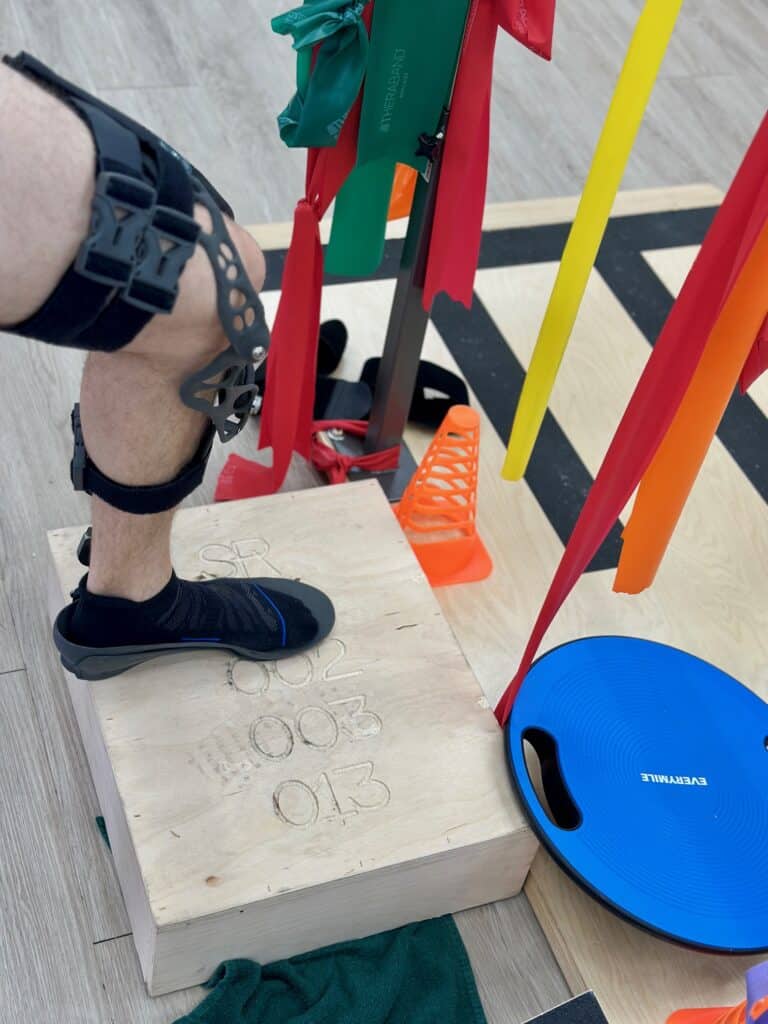
Patients may walk with more confidence on:
Uneven surfaces
Ramps and inclines
Community environments
Enhanced Rehabilitation Outcomes
When combined with physical therapy, MP-KAFOs support neuromuscular re-education and functional recovery.
Evaluation, Fitting, and Training
A Microprocessor KAFO is never an off-the-shelf device. Successful outcomes require:
Comprehensive biomechanical and gait evaluation
Custom fabrication of thigh, calf, and foot components
Precise alignment of knee and ankle joints
Software programming tailored to the patient
Structured gait training and follow-up adjustments
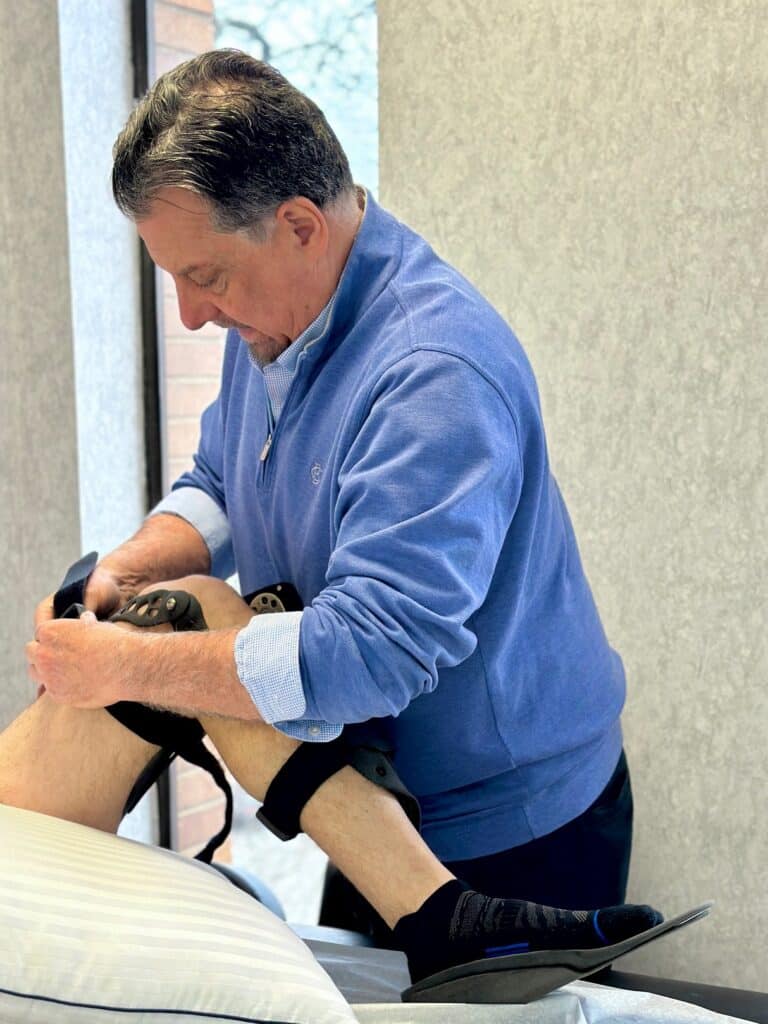
At Gramercy, Microprocessor KAFO fitting is performed within a rehabilitation-driven model, integrating orthotic expertise with physical therapy to ensure safety, comfort, and long-term success.
Is a Microprocessor KAFO the Same as an Exoskeleton?
While Microprocessor KAFOs share some technology with lower-limb exoskeletons, they remain medical orthotic devices, not robotic walking systems. They are:
Custom-built for individual pathology
Designed for daily clinical use
Integrated into conventional rehabilitation care
This positions MP-KAFOs as an advanced orthotic solution rather than a full robotic mobility aid.
Our Team

David Rabe, CPO
Clinical Director
David Rabe brings more than 30 years of expertise in orthotics, prosthetics, and medical rehabilitation. Widely recognized as a national leader in custom bracing and patient-centered mobility solutions, he has founded and directed multiple orthotic and prosthetic practices throughout New York and New Jersey. His career includes serving as Vice President of Rehabilitation Services at a major health system and holding senior leadership roles in both clinical care and product development.

Gene Shenker, DPT
Doctor of Physical Therapy | CEO
Dr. Gene Shenker, DPT, is the founder of Gramercy Physical Therapy in New York City and a licensed Doctor of Physical Therapy. For more than 15 years, he has been recognized for his patient-centered approach and expertise in manual therapy, providing high-quality care to individuals across Manhattan. His background spans outpatient and specialized rehabilitation, where he has built close partnerships with orthotists and prosthetists to deliver fully integrated treatment programs. Committed to innovation, Dr. Shenker continues to advance the field of rehabilitation through technology-driven solutions that improve patient outcomes.
Take the First Step Toward Better Support
At Gramercy Custom Orthotics & AFO, we specialize in complex lower-limb bracing, including Microprocessor KAFOs for patients in Manhattan, Union Square, Gramercy Park, and surrounding NYC neighborhoods.
Because these devices require advanced evaluation and training, a comprehensive in-person assessment is required prior to prescription.