
Foot and ankle pain often affects more than just the foot. When your foot hurts, you may change the way you walk, stand, climb stairs, or exercise. Over time, this can place extra stress on the ankle, knee, hip, lower back, or opposite side of the body.
That is why our treatment is not limited to the painful area alone. At Gramercy Physical Therapy, we evaluate how your foot and ankle move, how your body absorbs pressure, how you walk, and what activities make your symptoms better or worse.
Your physical therapy plan may include hands-on manual therapy, mobility work, strengthening exercises, balance training, gait retraining, and education to help you move more confidently.
Conditions We Commonly Treat
Foot and ankle pain can come from many different causes. Our physical therapists commonly work with patients experiencing:
- Plantar fasciitis and heel pain
- Achilles tendonitis or Achilles pain
- Ankle sprains and recurring ankle instability
- Flat feet and overpronation-related pain
- High arches and pressure-related foot discomfort
- Big toe pain, stiffness, or hallux rigidus
- Metatarsalgia or pain in the ball of the foot
- Posterior tibial tendon dysfunction
- Peroneal tendon irritation
- Arthritis-related foot and ankle pain
- Post-surgical foot and ankle rehabilitation
- Balance problems and walking instability
- Pain with standing, walking, running, or stairs
Some patients come in after a clear injury, such as an ankle sprain. Others develop symptoms gradually from overuse, footwear, poor mechanics, weakness, stiffness, or changes in activity level.
Why Foot and Ankle Pain Happens
The foot and ankle are responsible for supporting your body weight, absorbing impact, adapting to the ground, and helping you push forward with each step. Because they work constantly throughout the day, even small problems can become very noticeable.
Foot and ankle pain may be related to:
Joint stiffness
Limited ankle or big toe mobility can change how you walk and increase stress on nearby tissues.
Muscle weakness
Weakness in the calf, foot muscles, hips, or stabilizing muscles can affect balance and control.
Tendon irritation
Tendons such as the Achilles, posterior tibial tendon, or peroneal tendons can become painful from repetitive stress or poor loading.
Poor walking mechanics
Changes in gait can increase pressure on the heel, arch, ankle, knee, or hip.
Foot structure and support
Flat feet, high arches, overpronation, or reduced arch support may contribute to recurring pain in some patients.
Previous injury
After an ankle sprain or foot injury, stiffness, weakness, and instability can remain even after the initial pain improves.
How Physical Therapy Helps Foot & Ankle Pain
Physical therapy helps by identifying what is driving the pain and creating a plan to improve how the foot, ankle, and lower body function together.
Depending on your condition, treatment may focus on:
- Reducing pain and inflammation
- Restoring ankle, foot, and toe mobility
- Improving calf, foot, and hip strength
- Improving balance and ankle stability
- Correcting walking and movement patterns
- Helping you return to work, exercise, and daily activity
- Preventing symptoms from becoming recurring problems
The goal is not only to feel better temporarily, but to build a stronger foundation for long-term movement.
Manual Therapy, Mobility, and Strengthening
At Gramercy Physical Therapy, treatment may include hands-on manual therapy to improve joint mobility, reduce soft tissue tension, and help restore more comfortable movement.
For foot and ankle pain, manual therapy may be used to address stiffness in the ankle joint, foot joints, calf muscles, plantar fascia, or surrounding soft tissue. This may be combined with guided therapeutic exercise to strengthen the muscles that support the foot and ankle.
Your program may include:
- Ankle mobility exercises
- Calf stretching and strengthening
- Foot intrinsic strengthening
- Balance and stability drills
- Hip and lower body strengthening
- Step, squat, and walking retraining
- Return-to-sport or return-to-activity progressions
Because Gramercy PT already emphasizes hands-on care, mobility, and individualized recovery, this page should strongly connect foot and ankle treatment with the clinic’s existing one-on-one physical therapy identity.
Gait, Balance, and Walking Mechanics
Foot and ankle pain often changes the way you walk. You may avoid putting weight through the painful side, shorten your step, turn your foot outward, avoid pushing off, or shift pressure to another part of the foot.
These changes can sometimes help temporarily, but over time they may create new problems.
During your evaluation, your physical therapist may look at:
- How your foot contacts the ground
- How your ankle moves during walking
- Whether you are avoiding push-off
- How your balance and stability look on each side
- Whether hip, knee, or calf weakness is affecting your mechanics
- How your shoes or foot support may be influencing your symptoms
Improving gait mechanics can be especially important for people with recurring ankle sprains, plantar fasciitis, Achilles pain, flat feet, arthritis, or post-surgical recovery.
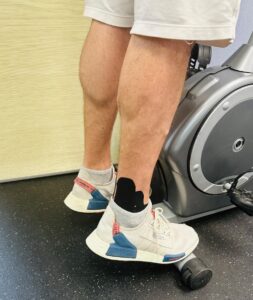
Custom Orthotics and Foot Support When Needed
In some cases, physical therapy alone is enough to reduce symptoms and restore function. In other cases, foot and ankle pain may also be influenced by how the foot is supported during standing, walking, or exercise.
If your symptoms are related to flat feet, overpronation, high arches, plantar fasciitis, recurring ankle instability, big toe arthritis, or pressure-related foot pain, your therapist may discuss whether custom orthotics or footwear modifications could support your recovery.
Custom orthotics may help by improving foot alignment, reducing pressure on painful areas, supporting the arch, and helping the foot function more efficiently during walking.
Orthotics are not a replacement for physical therapy. They work best when combined with a plan that also improves strength, mobility, balance, and walking mechanics.
Foot & Ankle Pain After an Injury
After an ankle sprain, foot injury, fracture, or surgery, pain may improve before full function returns. Many patients still experience stiffness, weakness, swelling, instability, or fear of movement after the initial injury has healed.
Physical therapy can help guide a safe progression back to walking, stairs, exercise, work demands, and sport.
Post-injury or post-surgical rehab may include:
- Gentle mobility restoration
- Swelling and pain management
- Progressive strengthening
- Balance and proprioception training
- Gait retraining
- Return-to-running or return-to-sport progression
- Education on safe activity levels
The goal is to restore confidence and reduce the risk of re-injury.
What to Expect During Your Visit
Your first visit begins with a detailed evaluation. Your physical therapist will ask about your symptoms, activity level, medical history, footwear, previous injuries, and what movements or activities increase your pain.
Your evaluation may include:
- Foot and ankle range of motion testing
- Strength testing
- Balance assessment
- Walking and movement analysis
- Joint and soft tissue assessment
- Review of your shoes or orthotics if relevant
- Discussion of your goals
From there, we create a personalized treatment plan based on your specific condition, pain level, and lifestyle.
Why Choose Gramercy Physical Therapy?
At Gramercy Physical Therapy, we are focused on helping patients move better, feel stronger, and return to the activities that matter most. The services page already emphasizes one-on-one personalized care, pain relief, mobility, manual physical therapy, and recovery-focused treatment.
Patients choose Gramercy PT for foot and ankle pain because we provide:
- One-on-one physical therapy
- Personalized treatment plans
- Hands-on manual therapy
- Private, attentive care
- Functional strengthening and mobility work
- Gait and balance-focused rehabilitation
- Support for long-term recovery, not just temporary relief
- Convenient care in Manhattan / Gramercy
We take time to understand how your pain affects your daily life and create a plan that helps you move with more comfort and confidence.
Book Foot & Ankle Pain Physical Therapy in Manhattan
You do not have to keep walking through foot or ankle pain. Whether your symptoms are new, chronic, sports-related, work-related, or connected to a previous injury, physical therapy can help you understand what is going on and begin the recovery process.
At Gramercy Physical Therapy in Manhattan, we provide personalized treatment for foot and ankle pain, including plantar fasciitis, ankle sprains, Achilles pain, heel pain, arthritis, balance issues, and gait-related problems.
Call Gramercy Physical Therapy today at (212) 598-5913 or book your appointment online.