What Does AFO Stand For?
AFO stands for ankle-foot orthosis.
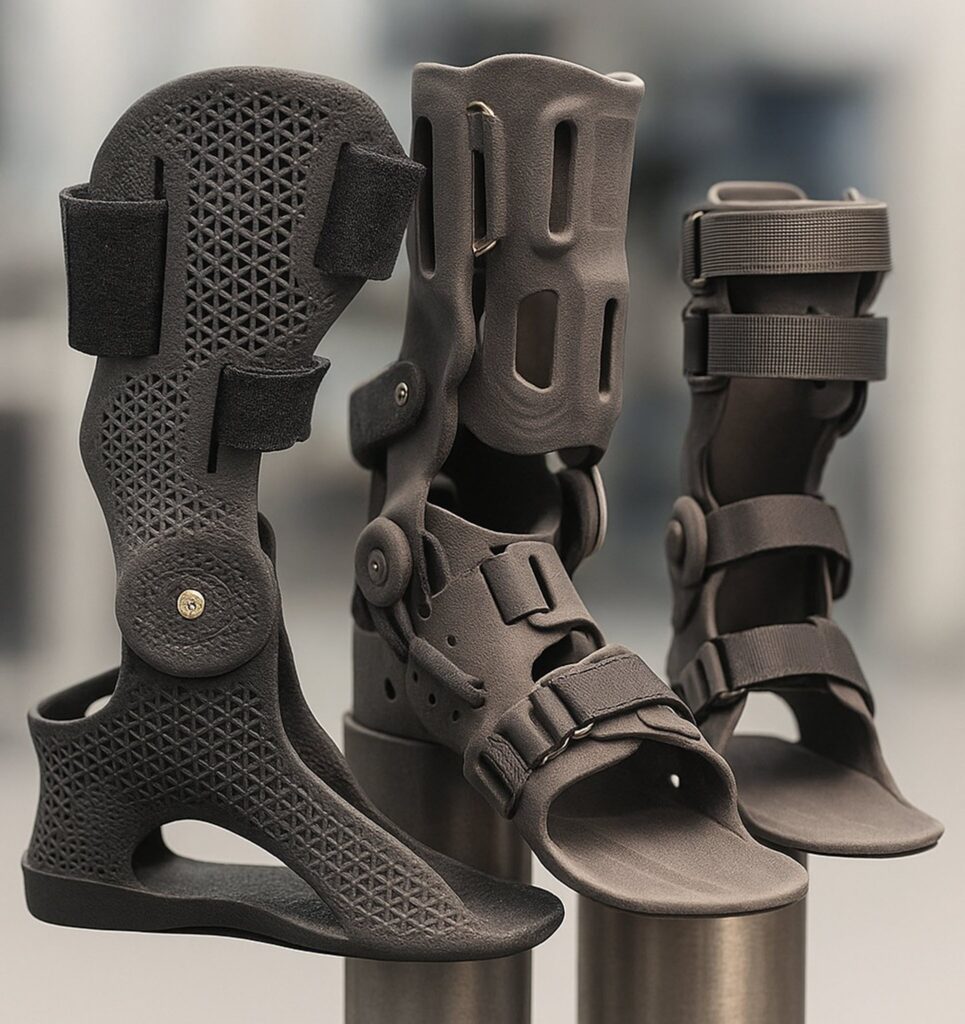
An AFO is an externally applied brace that crosses the ankle joint and supports or influences the position and movement of the foot and ankle.
Depending on its design, an AFO may help:
- Improve toe clearance during walking
- Support ankle weakness
- Control excessive ankle movement
- Improve foot positioning
- Provide medial-lateral stability
- Influence knee mechanics indirectly through control of the ankle
- Improve walking safety or efficiency in selected patients
AFOs are commonly prescribed for weakness involving the muscles that control the ankle. According to the American Academy of Physical Medicine and Rehabilitation’s PM&R KnowledgeNow, an AFO may assist foot clearance during swing and can influence the movement of the tibia and knee during stance.
What Does KAFO Stand For?
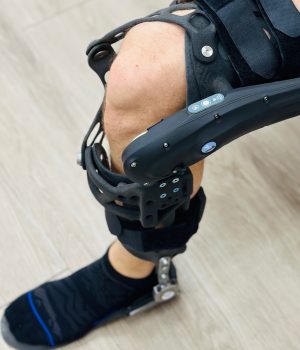
KAFO stands for knee-ankle-foot orthosis.
A KAFO extends farther up the leg than an AFO. It spans the:
Foot → ankle → lower leg → knee → thigh
This allows the orthosis to provide direct mechanical control at the knee in addition to supporting the ankle and foot.
KAFOs are generally considered when substantial knee weakness or instability cannot be adequately managed with an AFO or knee orthosis alone.
Depending on the patient’s condition and KAFO design, goals may include:
- Preventing unwanted knee buckling
- Controlling excessive knee hyperextension
- Providing medial-lateral knee stability
- Supporting the ankle and foot
- Improving standing stability
- Assisting safer walking
- Supporting a weakened lower extremity during weight bearing
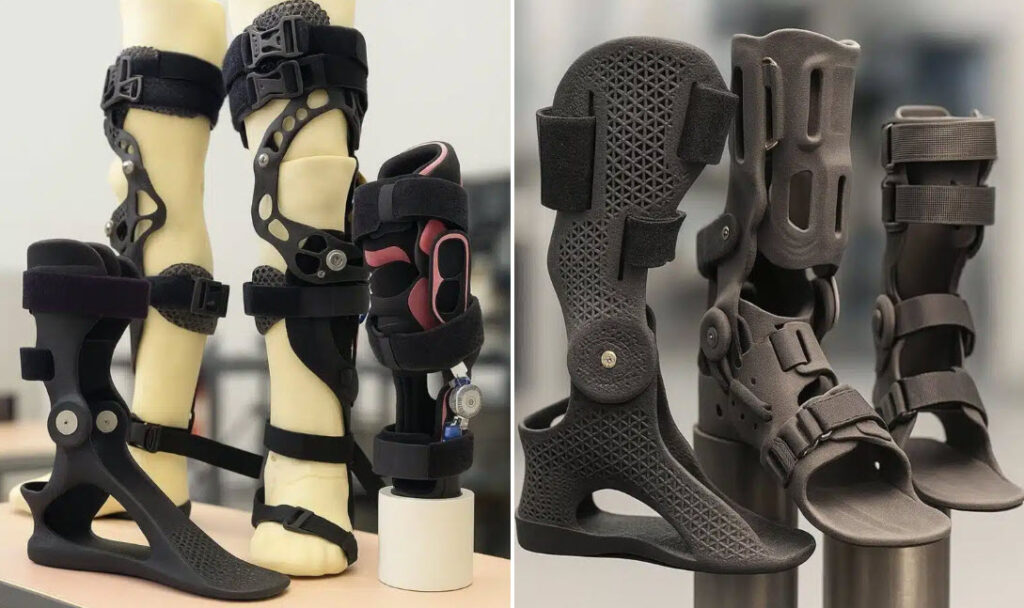
AFO vs. KAFO: Quick Comparison
| Feature | AFO | KAFO |
|---|---|---|
| Full name | Ankle-Foot Orthosis | Knee-Ankle-Foot Orthosis |
| Supports foot | Yes | Yes |
| Supports ankle | Yes | Yes |
| Directly controls knee | No | Yes |
| Extends above knee | No | Yes |
| Common reason for use | Ankle/foot weakness or impaired foot clearance | Significant knee instability combined with lower-leg weakness |
| Foot drop | Common indication | May be addressed when significant knee instability is also present |
| Knee buckling | May sometimes influence knee mechanics indirectly | Designed to provide direct knee control |
| Custom fabrication available | Yes | Yes |
| Gait assessment important | Yes | Yes |
The important point is that a KAFO is not simply a “better AFO.” It provides a different level of mechanical control.
More bracing is not automatically better.
When Is an AFO Commonly Used?
An AFO may be considered when the primary problem involves the foot and ankle and sufficient knee control remains available.
Examples can include:
- Foot drop
- Dorsiflexor weakness
- Ankle instability
- Certain neurological conditions
- Some gait abnormalities after stroke
- Peripheral nerve injuries
- Selected neuromuscular conditions
- Abnormal ankle positioning
For example, stroke rehabilitation guidance describes AFOs as devices frequently used when the foot needs support to reduce dragging during swing or when additional ankle support is required during stance. The same guidance emphasizes that AFO assessment should be performed by an appropriately trained professional as part of a broader rehabilitation program.
Different AFO designs may provide very different mechanical effects, which is why the diagnosis alone does not determine the appropriate brace.
When Might a KAFO Be Considered?
A KAFO becomes relevant when the knee also requires direct control.
One important clinical distinction is knee extensor strength. PM&R KnowledgeNow notes that marked quadriceps weakness or knee hyperextension that cannot be adequately controlled with an AFO may be indications for a KAFO.
Situations in which a clinician may evaluate someone for a KAFO can include:
- Significant quadriceps weakness
- Recurrent knee buckling
- Severe knee instability
- Neuromuscular weakness affecting both the knee and ankle
- Post-polio syndrome
- Certain spinal cord injuries
- Selected neurological disorders
- Knee hyperextension that cannot be adequately managed by a less extensive orthosis
The Gramercy bracing service also evaluates more complex lower-extremity bracing for patients with neuromuscular weakness and knee instability.
A patient’s diagnosis by itself, however, does not mean that a KAFO is automatically necessary.
Can an AFO Help Control the Knee?
Yes—this is where the difference becomes more nuanced.
An AFO does not physically extend across the knee, but changing ankle motion can alter the forces acting on the knee during walking.
For example, the angle and stiffness of an AFO may affect how the tibia progresses over the foot. This may influence knee flexion or extension during stance.
Therefore, some patients with knee-control problems may still be managed using an appropriately designed AFO.
A KAFO is generally considered when indirect control through the ankle is not sufficient and the knee itself requires additional mechanical stabilization.
This is one reason gait assessment is so important before selecting a brace.
What Are the Main Types of AFO?
There is no single AFO design.
Common categories include:
Solid AFO
A solid AFO substantially restricts ankle movement and can provide greater stability.
It may be appropriate when more substantial control is needed, but restricting ankle motion also changes normal walking mechanics.
Posterior Leaf Spring AFO
This design typically has a thinner, more flexible posterior section and may provide assistance for patients who need help with foot clearance but less rigid ankle control.
Hinged or Articulated AFO
An articulated AFO incorporates an ankle joint that allows selected motion.
Stops, assists, or other joint mechanisms can be used to permit some ankle movement while restricting another direction.
Carbon-Fiber AFO
Carbon-composite devices can provide a lightweight structure and, depending on design, may store and return energy during walking.
They are not appropriate for every patient, and the term “carbon-fiber AFO” describes a material category rather than one uniform mechanical design.
Custom-Molded AFO
A custom AFO is fabricated according to the patient’s anatomy and clinical prescription when more individualized alignment, accommodation, or mechanical control is required.
A review of commonly used AFOs notes that AFOs differ significantly in their structural characteristics and intended biomechanical effects.
What Are the Main Types of KAFO?
KAFOs also vary considerably.
A major distinction is what happens at the knee joint during walking.
Locked-Knee KAFO
A locked KAFO maintains the knee in a stable extended position during walking.
This can provide substantial stability but may make walking more physically demanding because the knee cannot flex normally during swing. Patients may compensate with movements such as hip hiking, circumduction, or vaulting to clear the leg.
Free-Motion KAFO
Some KAFO knee joints permit flexion and extension while providing other forms of stability.
Whether this design is appropriate depends on the patient’s muscle control and gait mechanics.
Stance-Control KAFO
A stance-control KAFO is designed to provide knee stability while the leg bears weight but permit knee flexion during appropriate portions of swing.
The goal is to avoid keeping the knee rigidly locked throughout the entire gait cycle. Stance-control systems may use mechanical or electronically controlled mechanisms.
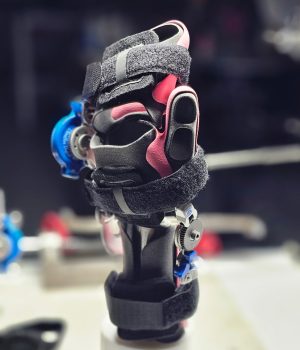
Microprocessor-Controlled KAFO
Certain advanced KAFO systems use sensors and electronic control to adjust knee-joint behavior during walking.
These systems may be considered for selected patients who have complex lower-extremity weakness or instability and meet specific functional requirements.
An important terminology point: microprocessor-controlled and powered KAFOs are not necessarily the same thing. Some microprocessor systems regulate resistance or locking without actively generating powered joint movement.
That distinction is important when comparing advanced bracing technologies.
Is a KAFO Better Than an AFO?
Neither device is inherently better.
The preferred brace is generally the least restrictive device that safely addresses the patient’s functional needs.
Someone with isolated foot drop and adequate knee stability may have no reason to wear a brace extending above the knee.
Conversely, someone with severe knee buckling may not receive enough stability from an AFO alone.
The correct question is therefore not:
“Which brace is stronger?”
It is:
“Which joints require support, how much control is necessary, and how will the device affect walking?”
How Does an Orthotist Decide Between an AFO and KAFO?
The decision may involve assessment of several factors.
Muscle Strength
The clinician may assess:
- Ankle dorsiflexors
- Plantarflexors
- Quadriceps
- Hamstrings
- Hip musculature
Significant weakness at the knee may change the required level of bracing.
Joint Range of Motion
A brace must work with the available movement at the:
- Foot
- Ankle
- Knee
- Hip
Contractures or restricted motion can substantially affect orthotic design.
Knee Stability
The clinician evaluates whether the knee:
- Buckles
- Hyperextends
- Drifts laterally or medially
- Remains adequately stable during weight bearing
Muscle Tone
Spasticity or abnormal tone may influence both ankle and knee mechanics.
Sensation and Skin Integrity
Reduced sensation, fragile skin, edema, vascular issues, or existing pressure areas can influence materials, interface design, and follow-up requirements.
Gait
Walking observation may identify:
- Toe drag
- Foot slap
- Knee buckling
- Knee hyperextension
- Hip hiking
- Circumduction
- Vaulting
- Shortened steps
- Balance problems
At Gramercy Custom Orthotics & AFO, gait and biomechanical assessment are incorporated into the custom bracing process.
Custom AFO or KAFO vs. Off-the-Shelf Bracing
Not every patient needs a custom device.
Prefabricated braces can be appropriate when:
- The required support is relatively straightforward
- Anatomy fits standard sizing
- Pressure problems are minimal
- Significant alignment correction is unnecessary
Custom fabrication may be considered when:
- Anatomy is difficult to accommodate
- Significant asymmetry exists
- More precise alignment is required
- Pressure-sensitive areas require accommodation
- Knee and ankle control must be coordinated
- Standard bracing has not provided an appropriate fit
- The mechanical prescription requires greater customization
The value of customization should come from addressing a clinical need—not simply from labeling a device “custom.”
What Happens During a Custom AFO or KAFO Evaluation?
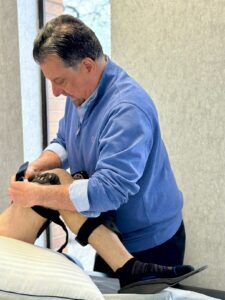
The fitting process should begin with an examination rather than simply selecting a brace from a catalog.
A comprehensive evaluation may include:
- Review of the medical diagnosis and history
- Assessment of strength and joint motion
- Examination of foot, ankle, and knee alignment
- Gait evaluation
- Discussion of falls or instability
- Skin and sensation assessment
- Review of assistive devices such as a cane or walker
- Discussion of work, home, and community mobility
- Measurements and, when appropriate, casting or other limb modeling
- Selection of appropriate mechanical features
After fabrication, the device should be assessed during standing and walking.
The brace may require adjustments to alignment, straps, joint settings, padding, or other components.
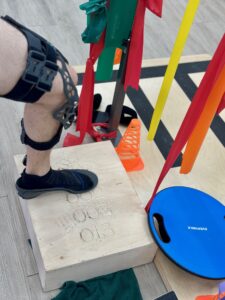
Why Gait Training Matters
Receiving an AFO or KAFO does not automatically mean the patient will immediately walk optimally with it.
The device changes how forces move through the lower extremity.
Gait training may help the patient learn:
- How to advance the leg
- How to safely load the braced limb
- How to negotiate turns
- How to use stairs
- How to manage uneven surfaces
- How to coordinate an assistive device
- How to recognize unsafe compensations
For complex KAFO users, this can be particularly important.
The Gramercy service model integrates orthotic fitting with rehabilitation and physical therapy rather than treating the brace as an isolated product.
Does a KAFO Require More Energy to Walk?
It can, depending on the device.
Traditional locked-knee KAFOs restrict knee flexion during walking. This may require compensatory movements to advance the leg and can increase the effort associated with walking.
One goal of stance-control technology is to provide stability during weight bearing while allowing knee flexion during swing, potentially producing a less restricted gait pattern. However, not every patient is an appropriate candidate, and evidence comparing different systems remains limited.
AFO or KAFO After Stroke: Which Is Used?
There is no universal answer.
An AFO is commonly considered after stroke when problems such as foot drop, ankle instability, or impaired foot clearance interfere with walking.
If substantial knee instability is also present and cannot be adequately managed through AFO design, rehabilitation, or other strategies, a more extensive orthosis may be evaluated.
The choice depends on the person’s specific motor deficits—not simply the fact that the person has had a stroke.
Can Someone Go From a KAFO to an AFO?
Sometimes.
Orthotic needs can change as:
- Strength improves
- Neurological recovery occurs
- Rehabilitation progresses
- Surgery changes alignment or stability
- Functional goals change
If a patient regains sufficient knee control, a clinician may determine that less extensive bracing is appropriate.
The opposite can also occur. If an AFO no longer provides adequate stability, a KAFO evaluation may be considered.
For this reason, orthotic prescriptions should be periodically reassessed rather than assuming that the original brace will remain optimal indefinitely.
When Should a Brace Be Re-Evaluated?
Contact the orthotic or rehabilitation team when:
- Pain develops
- Skin breakdown occurs
- Redness persists
- The brace becomes loose
- Knee buckling increases
- Falls or near-falls increase
- Walking suddenly becomes more difficult
- The patient’s strength changes
- Body weight changes substantially
- The brace is damaged
- The patient’s medical condition changes
New or rapidly worsening weakness should also be medically evaluated rather than managed simply by increasing the amount of bracing.
AFO and KAFO Evaluation in NYC
Gramercy Custom Orthotics & AFO provides lower-extremity orthotic evaluation and custom bracing in Manhattan.
247 3rd Avenue, Suite L2
New York, NY 10010
The clinical team includes Gene Shenker, DPT, and David Rabe, CPO, and the practice combines orthotic care with physical rehabilitation.
Patients requiring an AFO, KAFO, ankle brace, or custom knee brace can be assessed according to their diagnosis, strength, gait, alignment, and functional needs rather than selecting a device based solely on a brace category.
Learn more about custom AFO, ankle and knee braces in NYC.
References
- American Academy of Physical Medicine and Rehabilitation — Lower Limb Orthotics/Therapeutic Footwear. Clinical overview of AFOs, KAFOs, orthotic principles, indications, and lower-extremity bracing.
https://now.aapmr.org/lower-limb-orthotics-therapeutic-footwear/ - NCBI Bookshelf — Orthotic Management of Instability of the Knee Related to Neuromuscular and Central Nervous System Disorders. Describes the role of KAFOs when AFOs or knee orthoses do not provide sufficient control of knee instability.
https://www.ncbi.nlm.nih.gov/books/NBK378874/ - Ontario Health — Stance-Control Knee–Ankle–Foot Orthoses for People With Knee Instability: A Health Technology Assessment. Reviews stance-control KAFO technology and evidence.
https://pmc.ncbi.nlm.nih.gov/articles/PMC8376152/ - NCBI Bookshelf — Stroke Rehabilitation: Ankle-Foot Orthoses. Discusses AFO use for foot drop, ankle stability, professional assessment, and integration into rehabilitation after stroke.
https://www.ncbi.nlm.nih.gov/books/NBK327894/ - Choo YJ, Chang MC. Commonly Used Types and Recent Development of Ankle-Foot Orthosis: A Narrative Review. Healthcare. 2021;9(8):1046. Reviews common AFO designs and their clinical applications.
https://pubmed.ncbi.nlm.nih.gov/34442183/
Written by: Gene Shenker, DPT
Doctor of Physical Therapy | Gramercy Physical Therapy
Clinically reviewed by: David Rabe, CPO
Certified Prosthetist-Orthotist | Clinical Director