Foot drop can make something as routine as walking across a room more difficult. When the muscles that lift the front of the foot are weak or paralyzed, the toes may drag during walking, increasing the effort required to clear the ground and potentially increasing the risk of tripping.
An AFO brace for foot drop, or ankle-foot orthosis, is one option used to support the foot and ankle and improve positioning during walking. However, there is no single AFO design that is appropriate for every person with foot drop. The underlying diagnosis, muscle strength, joint mobility, walking pattern, balance, lifestyle, footwear, and rehabilitation goals all influence the choice of brace.
At Gramercy Custom Orthotics & AFO in Manhattan, patients can be evaluated for custom AFOs as part of a rehabilitation-focused bracing program. The practice combines orthotic care with gait assessment, fitting, physical therapy, and follow-up rather than treating the brace as a stand-alone product. The clinic currently provides custom AFO, ankle, and knee bracing services.
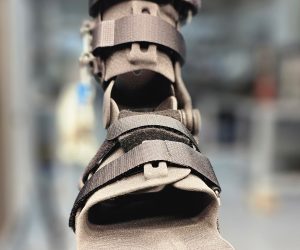
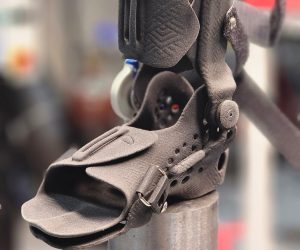
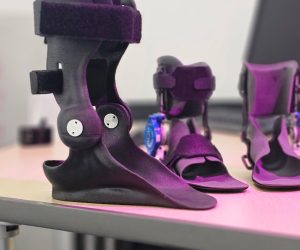
What Is Foot Drop?
Foot drop, sometimes called drop foot, describes difficulty lifting the front of the foot upward at the ankle.
It is important to understand that foot drop is a symptom, not a disease by itself. Possible causes include injury or compression of the peroneal nerve, lumbar nerve-root problems, peripheral neuropathy, stroke, multiple sclerosis, and other neurological or muscular conditions.
Common signs may include:
- Toes catching or dragging on the floor
- Difficulty lifting the front of the foot
- A “slapping” sound when the foot contacts the ground
- Lifting the knee higher than usual to clear the toes
- Weakness around the ankle
- Numbness or altered sensation in some patients
- Increased concern about tripping or falling
Because there are many possible causes, new or unexplained foot drop should be medically evaluated rather than treated only by purchasing a brace. Mayo Clinic notes that evaluation may include a physical examination and, depending on the suspected cause, imaging, electromyography, or nerve-conduction testing.
What Is an AFO Brace?
AFO stands for ankle-foot orthosis.
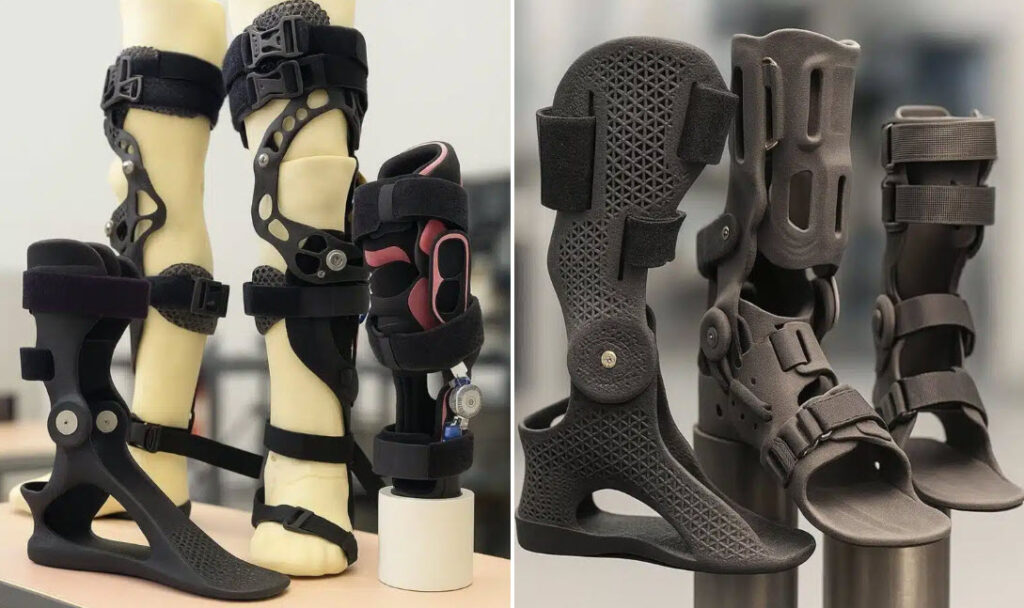
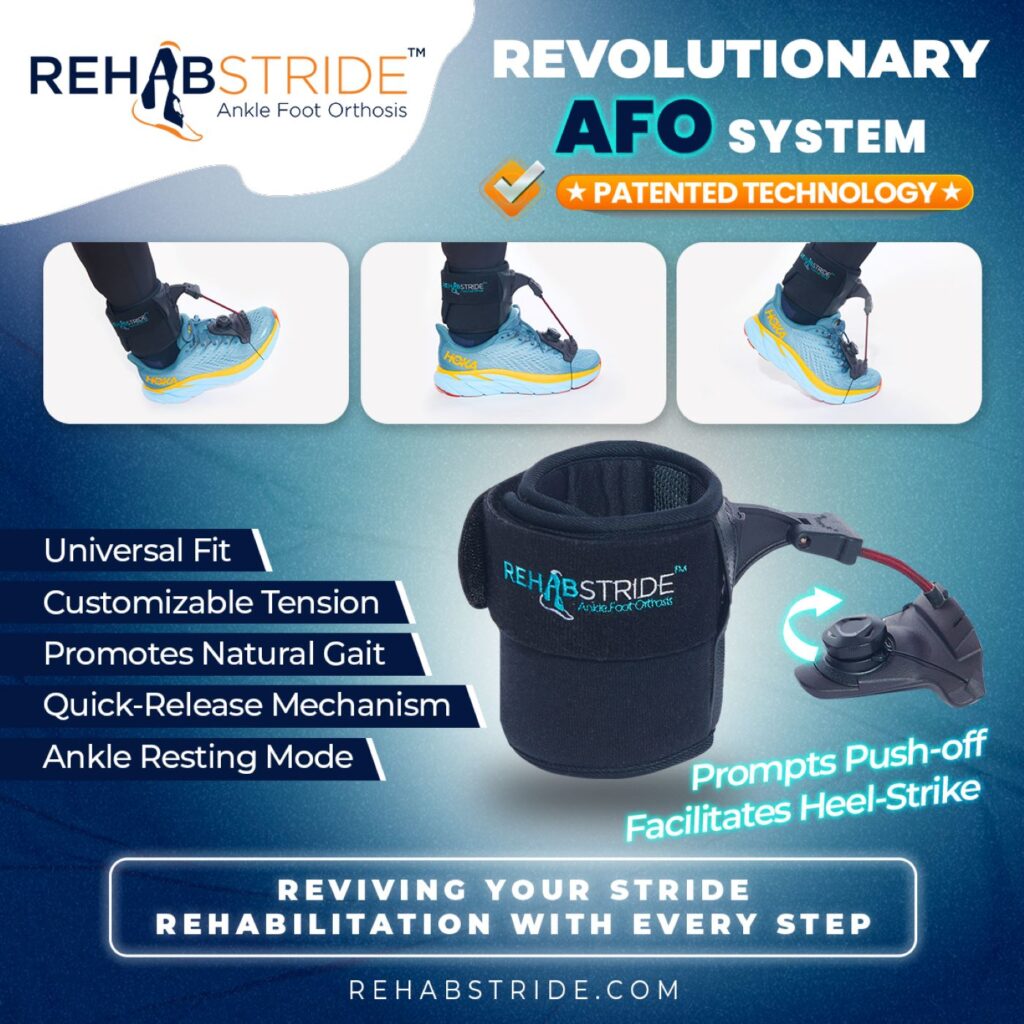
An AFO is an orthotic device that supports the foot and ankle. Depending on its design, it may help position the ankle, improve toe clearance during the swing phase of walking, provide stability when the foot contacts the ground, or influence movement at both the ankle and knee.
For a person with foot drop, one common goal is to prevent the toes from catching the ground while the leg swings forward.
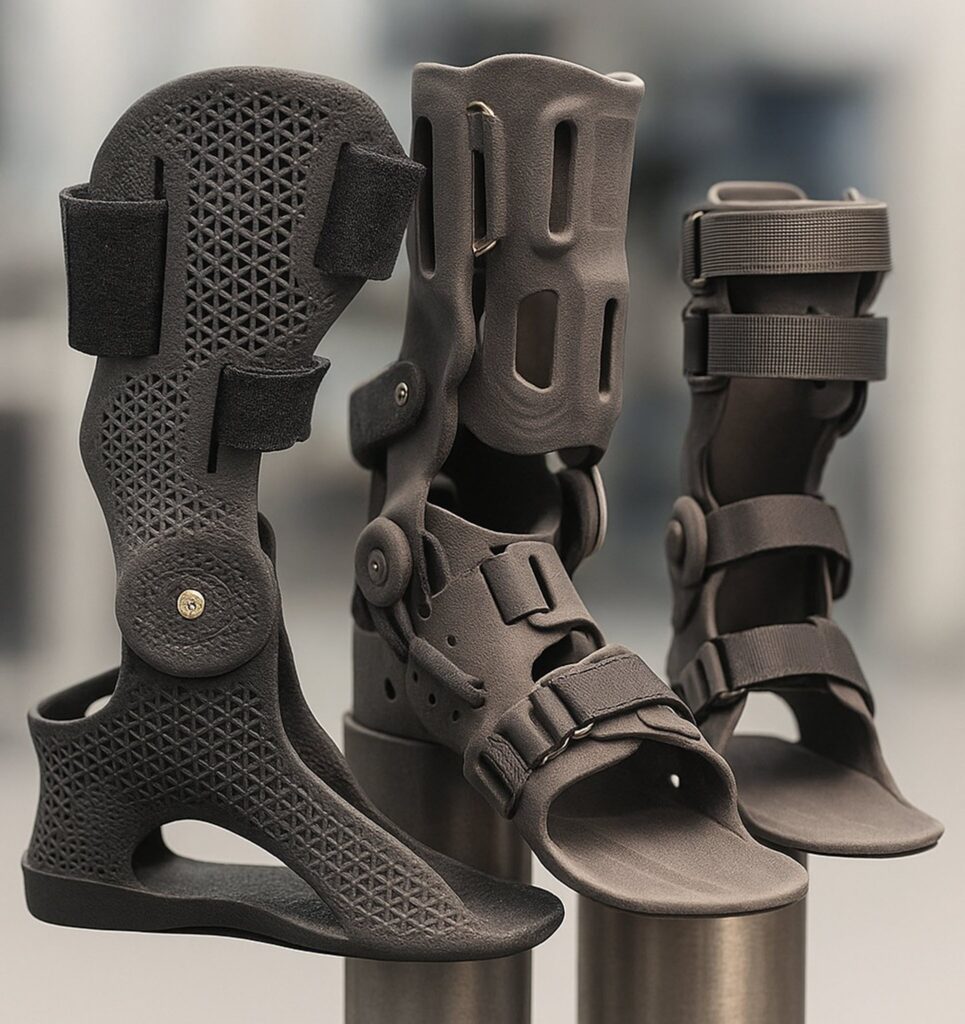
AFOs are widely used in rehabilitation for neurological and neuromuscular conditions. A review of AFO designs describes multiple articulated and non-articulated approaches because different devices provide different levels of motion control, flexibility, and assistance.
How Can an AFO Help With Foot Drop?
An AFO does not necessarily correct the underlying nerve or muscle disorder causing foot drop. Instead, it may help compensate for impaired movement while the patient walks.
Depending on the individual and the type of AFO, potential goals may include:
- Holding the foot in a safer position
- Improving toe clearance
- Reducing toe catching
- Improving ankle stability
- Supporting a more efficient walking pattern
- Reducing compensatory high-stepping movements
- Improving confidence during walking
Mayo Clinic identifies ankle-foot braces or splints as one of several treatments that may be used for foot drop, alongside physical therapy, nerve stimulation, and in selected cases surgical treatment.
Evidence also depends heavily on the diagnosis. For example, a systematic review and meta-analysis of people after stroke found that AFO use improved ankle dorsiflexion during walking and produced a small short-term improvement in walking speed compared with walking without an AFO. The authors classified the certainty of the evidence as low, which is an important limitation.
That is why an AFO should be selected based on an individual clinical assessment rather than simply choosing whichever brace appears strongest or most rigid.
What Are the Main Types of AFO Braces?
There are many AFO designs. The appropriate choice depends on the amount of muscle weakness, joint mobility, tone, knee control, foot position, activity level, and functional goals.
Solid AFO
A solid AFO substantially limits ankle movement.
It may be considered when a patient needs greater stability or motion control. The trade-off is that restricting ankle movement may also affect how the leg progresses over the foot during walking.
A solid brace is therefore not automatically preferable simply because it provides more support.
Posterior Leaf Spring AFO
A posterior leaf spring AFO has a thinner or more flexible posterior section that permits some deformation during walking.
It is often associated with dorsiflexion assistance for people who need help clearing the toes but do not require as much ankle control as a rigid AFO provides.
Articulated or Hinged AFO
An articulated AFO incorporates a joint near the ankle.
Depending on the design and settings, it may allow selected ankle motion while limiting other movements. This can be useful when controlled movement is desirable, but adequate strength, range of motion, and knee stability must be considered.
Carbon-Fiber AFO
Some AFOs use carbon-fiber or composite materials to create a thinner, lighter structure with energy-storing properties.
Research on carbon-fiber AFOs includes several patient populations and brace designs, so findings from one device should not automatically be applied to all carbon AFOs.
Custom-Molded AFO
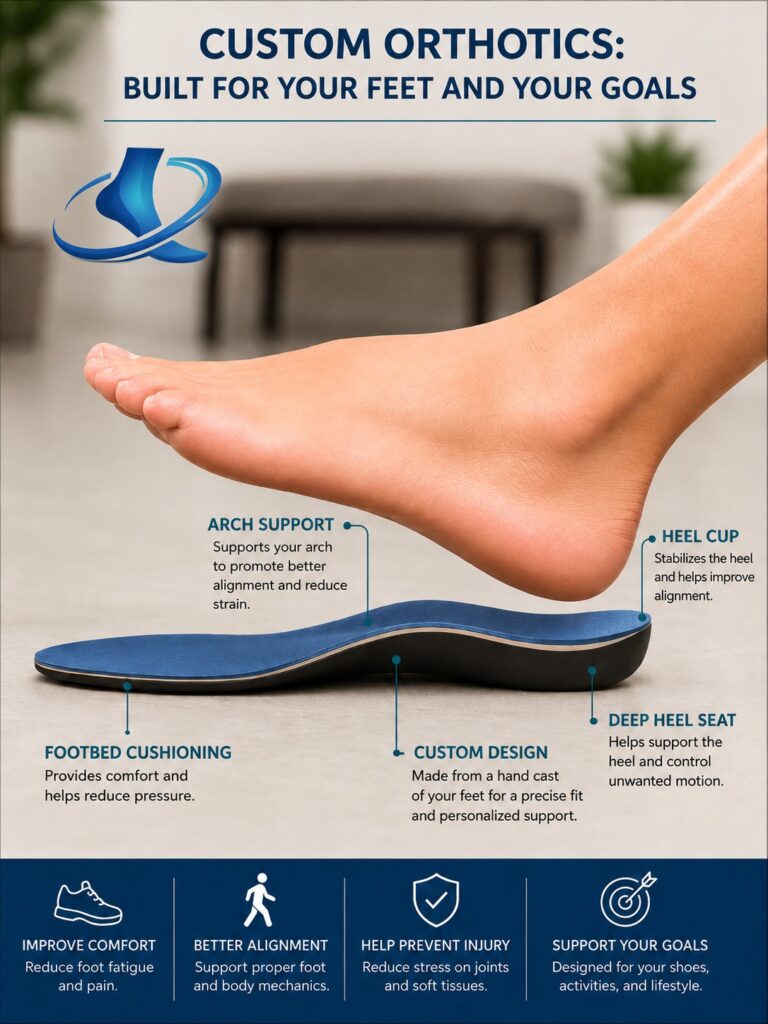
A custom AFO is fabricated according to the individual patient’s anatomy and clinical prescription.
Customization may be appropriate when the patient needs more precise:
- Alignment
- Pressure management
- Ankle control
- Foot positioning
- Accommodation of deformity
- Shoe integration
- Mechanical characteristics
Custom does not automatically mean that a device is medically superior to every prefabricated AFO. The question is whether the patient’s clinical needs justify the additional customization.
Custom AFO vs. Off-the-Shelf AFO
Prefabricated AFOs can work well for some patients, particularly when the anatomy, required level of support, and functional needs match an available design.
A custom AFO may be considered when:
- Foot or ankle anatomy is difficult to accommodate
- Greater control of alignment is required
- The patient has significant asymmetry
- Pressure-sensitive areas need accommodation
- An off-the-shelf brace does not fit appropriately
- The patient requires a particular mechanical response
- More extensive adjustment is anticipated
The decision should be based on clinical need rather than the assumption that custom is always better.
Which AFO Is Best for Foot Drop?
There is no single “best AFO for foot drop.”
That distinction is important for both patients and medical SEO.
Foot drop caused by stroke may present differently from foot drop caused by peripheral nerve injury, multiple sclerosis, Charcot-Marie-Tooth disease, spinal pathology, or another neuromuscular condition.
AFO selection may depend on:
- Degree of dorsiflexion weakness
- Plantarflexor strength
- Knee stability
- Muscle tone or spasticity
- Ankle range of motion
- Foot alignment
- Sensation and skin integrity
- Balance
- Walking speed
- Use of a cane or walker
- Work and recreational activities
- Shoe type
- Ability to put the brace on independently
A 2024 systematic review examining muscle activity during AFO use found considerable variability among AFO designs and patient populations. The authors emphasized that the orthotic goals should be aligned with the individual’s clinical presentation rather than making broad conclusions about all AFOs.
What Happens During an AFO Evaluation?
A quality AFO evaluation should involve considerably more than measuring the size of the patient’s shoe.
The clinician may evaluate:
Medical and Functional History
This can include:
- Cause of foot drop
- Duration of symptoms
- Previous surgery or injury
- Neurological diagnosis
- History of falls
- Pain
- Numbness
- Previous braces
- Daily walking requirements
- Work demands
- Stairs and community mobility
Strength and Range of Motion
The clinician may assess the muscles involved in:
- Dorsiflexion
- Plantarflexion
- Inversion
- Eversion
- Knee control
- Hip control
Ankle flexibility is particularly important because a brace must work with the available range of motion.
Gait Assessment
Watching the patient walk helps identify issues such as:
- Toe drag
- Foot slap
- High-stepping gait
- Knee hyperextension
- Knee buckling
- Shortened step length
- Compensatory hip movement
- Balance deficits
Gramercy’s existing bracing program specifically incorporates gait and biomechanical evaluation as part of the fitting process.
Custom Fabrication and Fitting
If a custom AFO is appropriate, measurements and an impression or model of the limb may be obtained according to the type of device being prescribed.
The completed brace should then be evaluated on the patient rather than simply dispensed.
The clinician may examine:
- Heel position
- Arch and foot contact
- Ankle alignment
- Pressure points
- Strap placement
- Knee response
- Toe clearance
- Walking pattern
- Shoe compatibility
- Comfort
Small changes to alignment or trim lines can sometimes significantly change how an AFO functions.
What Shoes Work With an AFO?
Footwear is an important part of AFO use.
An AFO occupies space inside the shoe, so footwear generally needs adequate:
- Width
- Depth
- Heel stability
- Opening size
- Closure adjustment
Shoes with removable factory insoles may provide additional room.
Patients should bring the shoes they actually expect to wear to the fitting rather than assuming the brace will work equally well with every pair.
Does an AFO Replace Physical Therapy?
Usually, these should be considered separate but potentially complementary interventions.
An AFO may mechanically assist positioning or stability, but it does not by itself address every component of:
- Strength
- Flexibility
- Balance
- Motor control
- Endurance
- Transfers
- Stair negotiation
- Walking practice
Physical therapy may include strengthening, stretching, balance work, gait training, and education appropriate to the underlying condition. Mayo Clinic specifically lists physical therapy alongside bracing as potential components of foot-drop treatment.
At Gramercy, AFO fitting can be incorporated into a broader rehabilitation approach rather than separating the device from gait training and physical therapy. The clinic’s service page describes a process that includes evaluation, custom fabrication, fitting, gait training, and ongoing adjustment.
Can an AFO Make the Muscles Weaker?
Patients sometimes worry that using an AFO will cause the leg muscles to stop working.
Current evidence does not support such a simple conclusion.
A 2024 systematic review examining muscle activity in people with neuromuscular impairment found considerable variability in how AFOs affected muscle activation. Importantly, the longitudinal studies included in that review did not identify an adverse long-term effect on muscle activity, although differences among brace types and diagnoses prevent broad conclusions.
The appropriate amount of brace use should still be individualized by the patient’s rehabilitation and medical team.
How Long Does It Take to Get Used to an AFO?
Adaptation varies substantially.
Some patients tolerate a new brace quickly. Others need a gradual wearing schedule while the clinician monitors:
- Skin
- Pressure areas
- Comfort
- Walking mechanics
- Fatigue
- Shoe fit
New redness that disappears shortly after removing the brace may occur during adaptation, but persistent redness, blistering, numbness, skin breakdown, significant pain, or worsening symptoms should be reported.
Patients with impaired sensation or circulation require particular attention to skin inspection.
When Should an AFO Be Adjusted?
Follow-up is particularly important because the patient’s needs can change.
An adjustment may be appropriate if:
- The brace causes painful pressure
- Skin irritation persists
- The toes continue to catch
- The heel lifts excessively
- Walking becomes more difficult
- The knee begins buckling or hyperextending differently
- The brace no longer fits the shoe properly
- The patient’s strength or mobility changes
- The brace becomes damaged or worn
Gramercy’s current bracing service emphasizes ongoing follow-up and modification as the patient’s condition changes.
When Should Someone With Foot Drop See a Doctor?
Anyone with new or unexplained difficulty lifting the foot should be medically evaluated.
Foot drop can arise from problems involving peripheral nerves, nerve roots in the spine, the brain or spinal cord, or muscles. Determining the cause may affect both treatment and prognosis.
Seek prompt medical attention when foot weakness appears suddenly, particularly when accompanied by other new neurological symptoms such as weakness elsewhere, facial changes, speech difficulty, severe back symptoms, or changes in bladder or bowel function.
An AFO can support walking, but it should not delay appropriate evaluation of a new neurological problem.
Custom AFO Fitting in NYC
Gramercy Custom Orthotics & AFO provides evaluation and fitting for custom AFO, ankle, and knee braces at its Manhattan location.
247 3rd Avenue, Suite L2
New York, NY 10010
The clinical team includes Gene Shenker, DPT, and David Rabe, CPO, and the practice integrates orthotic fitting with rehabilitation and physical therapy.
For patients with foot drop, the goal is not simply to find a brace that holds the foot up. The goal is to determine why support is needed, how much control is appropriate, how the brace changes gait, and whether it works safely and comfortably during real-world activity.
For information about custom AFO, ankle, and knee braces in NYC, link this phrase internally to your main bracing service page.
Frequently Asked Questions
What does AFO stand for?
AFO stands for ankle-foot orthosis. It is a brace that supports the foot and ankle and may be used for conditions involving weakness, instability, abnormal positioning, or impaired walking.
Does an AFO help foot drop?
An AFO may help support the foot and improve toe clearance during walking. Its effectiveness depends on the cause and severity of foot drop, the type of AFO, fitting, and the patient’s overall walking mechanics.
What is the best AFO for foot drop?
There is no single best AFO for everyone. Solid, flexible, articulated, carbon-fiber, and other designs have different mechanical characteristics. Selection should be based on strength, range of motion, knee stability, gait, diagnosis, footwear, and functional goals.
Can you walk normally with an AFO?
Some people experience improved walking mechanics with an AFO, but results vary. The brace may improve foot clearance or stability, while the underlying neurological or muscular condition can continue to affect gait.
Is a custom AFO better than an off-the-shelf brace?
Not necessarily. Prefabricated AFOs can be appropriate for some patients. Custom fabrication may be beneficial when anatomy, alignment, pressure management, or mechanical requirements cannot be adequately addressed by a standard device.
Do you need physical therapy when using an AFO?
Not every patient requires the same rehabilitation program, but physical therapy is commonly used for foot drop to address strength, flexibility, balance, and gait. An AFO and physical therapy often serve different but complementary purposes.
How long do you wear an AFO for foot drop?
There is no universal timeline. Duration depends on the cause of foot drop, recovery, strength, safety, and functional needs. Some patients use an AFO temporarily while a nerve recovers, while others with chronic neurological conditions may require longer-term support.
References
- Mayo Clinic — Foot Drop: Symptoms and Causes. Explains that foot drop is a sign of an underlying neurological, muscular, or anatomical problem and outlines common causes. Mayo Clinic: Foot Drop — Symptoms and Causes
- Mayo Clinic — Foot Drop: Diagnosis and Treatment. Covers medical evaluation and treatment options including ankle-foot bracing, physical therapy, nerve stimulation, and surgery. Mayo Clinic: Foot Drop — Diagnosis and Treatment
- Cleveland Clinic — Foot Drop. Medically reviewed overview of foot-drop causes, symptoms, diagnosis, and treatment. Cleveland Clinic: Foot Drop
- Wada Y, et al. The effect of ankle-foot orthosis on ankle kinematics in individuals after stroke: a systematic review and meta-analysis. PM&R. 2022. Found short-term improvements in ankle dorsiflexion and walking speed after stroke, while noting low certainty of evidence.
- Kenworthy S, Parthasarathy G, Seale J. Investigating the effects of ankle foot orthoses on electromyography in impaired populations: a systematic review. Disability and Rehabilitation. 2024. Useful for addressing concerns about AFO use and muscle activity.
- Passive Articulated and Non-Articulated Ankle–Foot Orthoses for Gait Rehabilitation: A Narrative Review. 2023. Reviews common AFO designs, mechanical characteristics, benefits, and limitations.
Written by: Gene Shenker, DPT
Doctor of Physical Therapy | Gramercy Physical Therapy
Clinically reviewed by: David Rabe, CPO
Certified Prosthetist-Orthotist | Clinical Director