Walking safely requires coordinated control of the foot, ankle, knee, and hip. When weakness, neurological impairment, joint instability, or abnormal positioning interferes with that control, an AFO (ankle-foot orthosis) may be prescribed to provide additional support.
But receiving a custom AFO involves much more than simply choosing a brace size.
A properly designed custom AFO brace is created around the individual patient’s anatomy, strength, range of motion, walking pattern, diagnosis, footwear, and functional needs. Even after fabrication, the orthosis may require careful fitting and professional adjustments to optimize how it interacts with the patient’s leg and foot.
At Gramercy Custom Orthotics & AFO in Manhattan, custom bracing is approached as a clinical process involving evaluation, fabrication, fitting, gait assessment, and follow-up care.
Learn more about our custom AFO, ankle and knee braces in NYC.
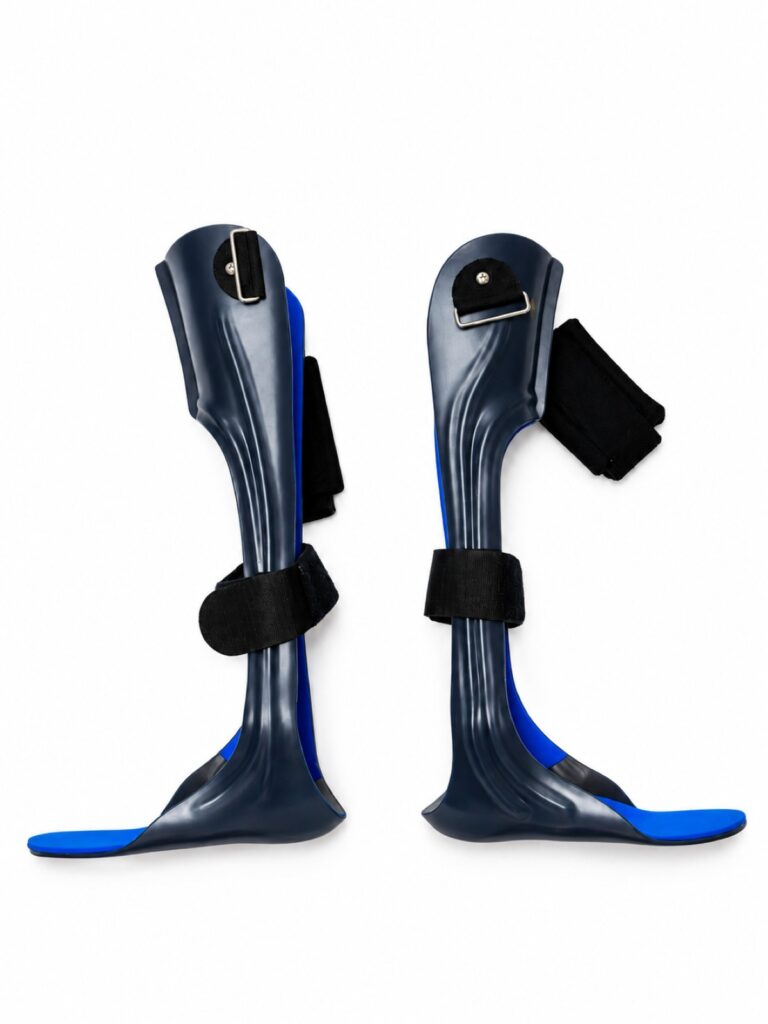
What Is a Custom AFO?
An ankle-foot orthosis (AFO) is a brace that supports or influences the position and movement of the foot and ankle.
Depending on its design, an AFO may be used to:
- Improve foot clearance during walking
- Support weakness associated with foot drop
- Stabilize the ankle
- Control excessive or unwanted movement
- Improve foot positioning
- Influence knee mechanics through ankle control
- Provide greater stability during standing and walking
AFOs are commonly used for walking impairments related to neurological, neuromuscular, cerebrovascular, and musculoskeletal conditions. PubMed Central (PMC)
A custom AFO differs from a standard off-the-shelf brace because its geometry and mechanical characteristics can be individualized for the patient.
Research on custom AFO design also shows that there is no single ideal stiffness, shape, or construction for every patient. The mechanical requirements depend on the person’s impairment and functional needs.
Step 1: A Clinical and Gait Evaluation
Before a custom AFO is fabricated, the clinician first needs to understand what problem the brace is intended to address.
An evaluation may include:
- Medical diagnosis and history
- Muscle strength
- Ankle and foot range of motion
- Knee stability
- Foot alignment
- Muscle tone or spasticity
- Sensation and skin condition
- Balance
- Previous brace use
- History of falls
- Daily activity requirements
Walking should also be observed whenever possible.
A gait assessment may reveal issues such as:
- Toe dragging
- Foot slap
- Excessive plantarflexion
- Knee hyperextension
- Knee buckling
- Hip hiking
- Circumduction
- Shortened steps
- Compensatory movements
This matters because an AFO does not affect only the ankle. Changing the way the ankle moves can also alter forces at the knee and influence the patient’s overall walking pattern.
Step 2: Creating the Patient-Specific Shape
When a custom AFO is indicated, the clinician obtains an accurate representation of the patient’s foot and lower leg.
Traditional custom AFO fabrication has commonly involved creating a physical cast of the patient’s foot and leg and producing a positive model from that impression. Thermoplastic material can then be formed around the model to create the brace. Digital acquisition and additive-manufacturing methods are also increasingly used in modern orthotic practice. PubMed Central (PMC)
The exact fabrication method varies according to the:
- Type of AFO
- Orthotic laboratory
- Materials being used
- Patient’s anatomy
- Mechanical requirements of the prescription
The important point is that customization is more than reproducing the shape of the leg.
The clinician must also determine how much flexibility, resistance, alignment control, and support the device should provide.
Step 3: Selecting the AFO Design and Materials
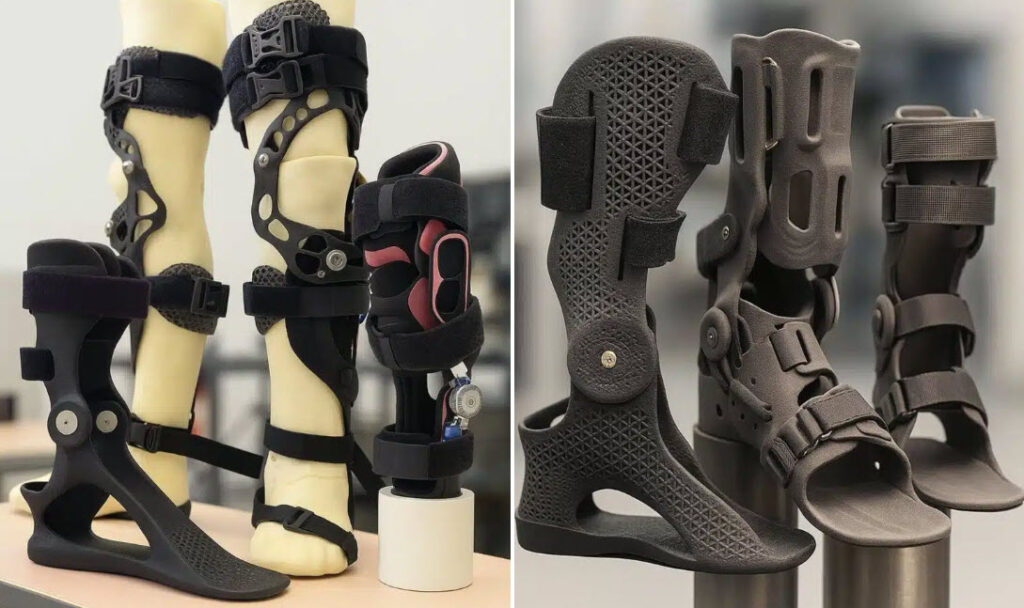
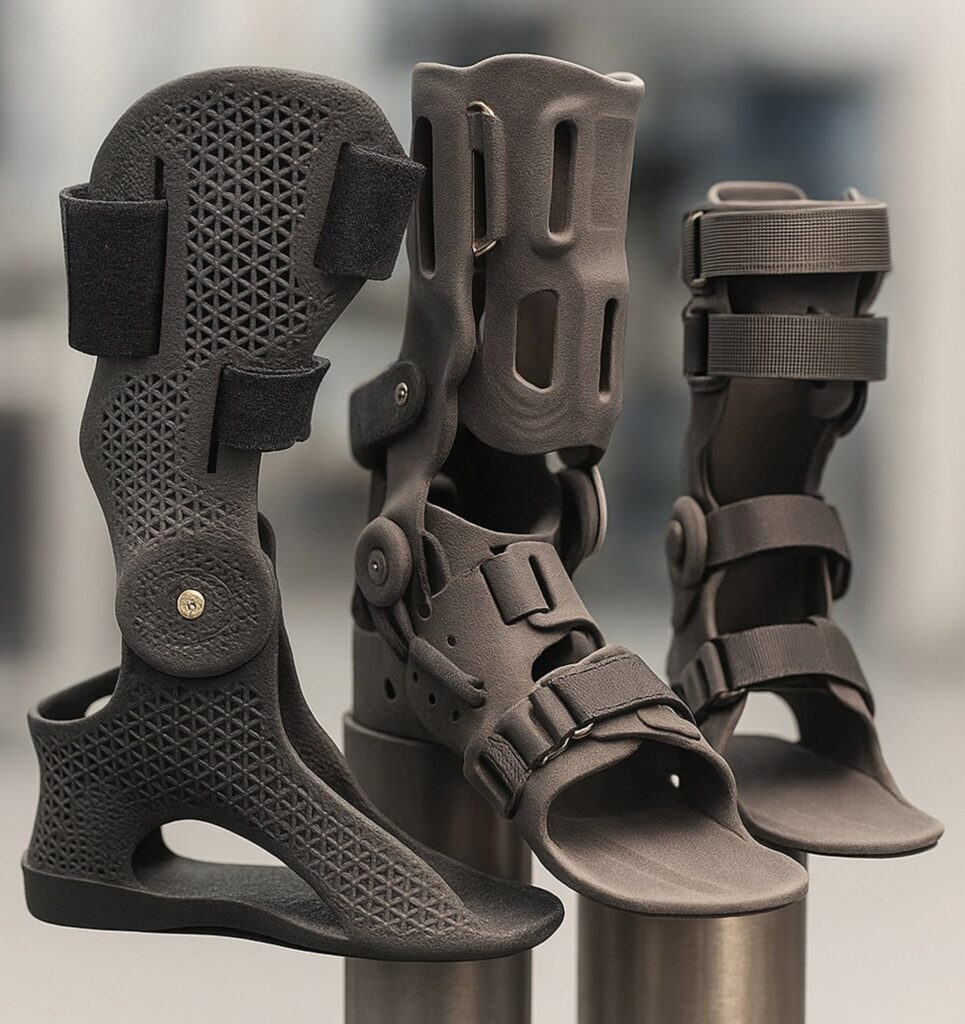
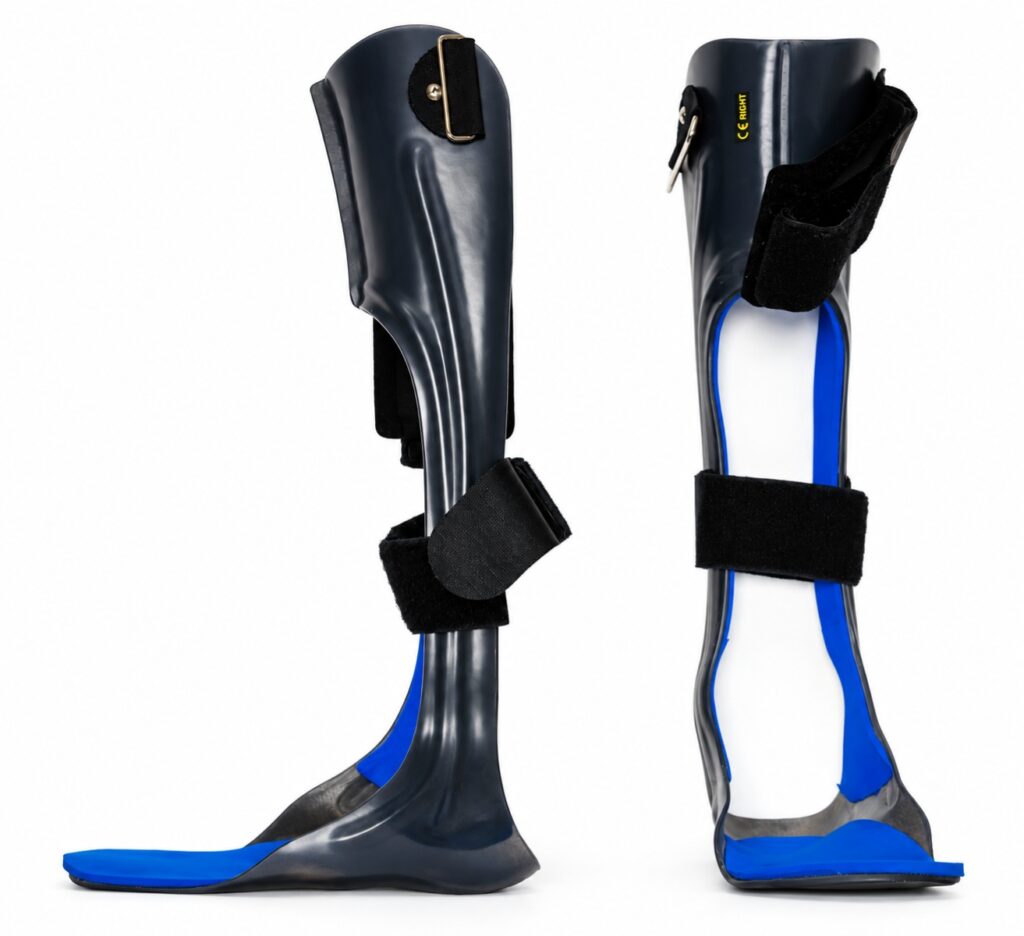
Not all custom AFO braces look or function the same.
Depending on the patient’s needs, a device may be:
- Solid or relatively rigid
- Flexible
- Posterior leaf spring
- Articulated or hinged
- Anterior-shell design
- Carbon-composite
- Thermoplastic
- A combination of several materials
A more rigid brace is not automatically a better brace.
For example, a patient who needs substantial ankle control may require a different device from someone who primarily needs assistance clearing the toes during swing.
The prescription must balance stability with the amount of movement that should remain available.
This is why two patients with the same general diagnosis may receive very different AFOs.
Step 4: Custom Fabrication
Once the clinical prescription and patient-specific model are available, the orthosis is fabricated.
With traditional thermoplastic AFO fabrication, heated material is formed over the patient-specific model and allowed to cool into its prescribed shape. The brace is then trimmed, finished, padded, and fitted with appropriate straps or other components.
Custom fabrication may allow the orthotist to individualize features such as:
- Calf-shell shape
- Footplate length
- Arch contour
- Heel positioning
- Trim lines
- Ankle rigidity
- Padding
- Strap position
- Pressure relief
- Shoe interface
Traditional thermal molding remains widely used for custom AFO manufacture, although digital and additive-manufacturing techniques continue to develop.
Step 5: Why the Initial AFO Fitting Matters
Fabrication is not the end of the process.
When the patient receives the AFO, the orthotist should evaluate how it actually fits and functions on the body.
The fitting may include checking:
- Heel position inside the brace
- Arch contact
- Calf-shell fit
- Strap placement
- Pressure around bony areas
- Footplate length
- Skin contact
- Shoe compatibility
- Ankle positioning
The patient should then stand and walk in the brace whenever clinically appropriate.
A device that looks correct on a table may behave differently when the patient places weight through it and begins walking.
Step 6: Professional AFO Adjustments
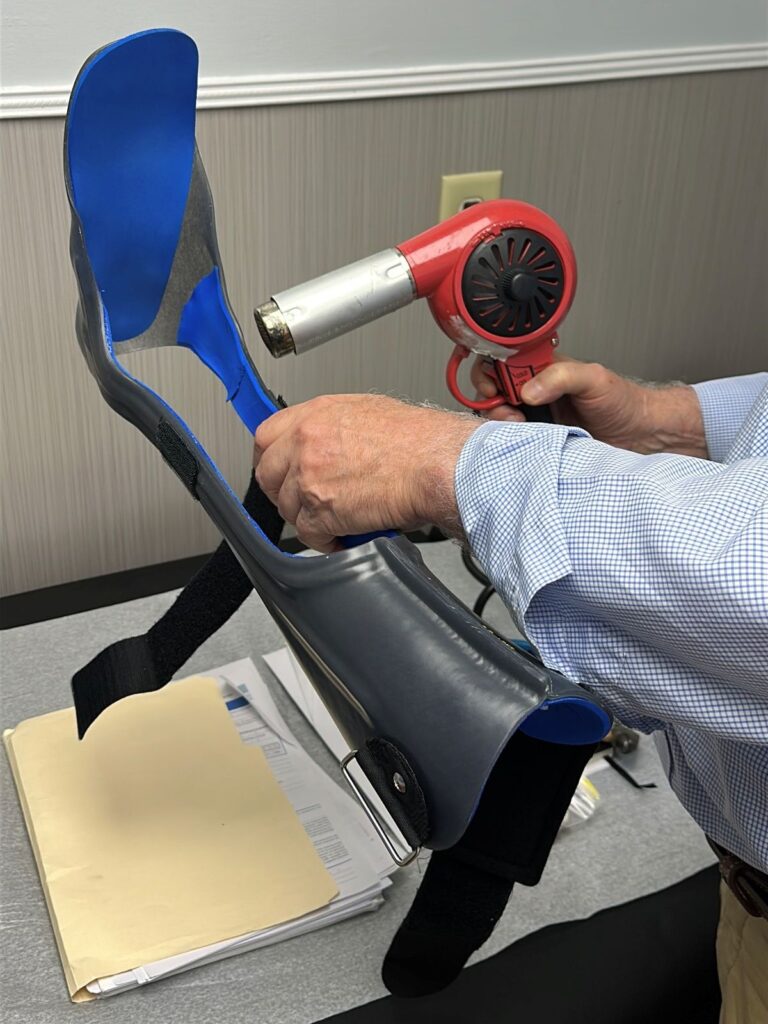
One of the benefits of certain thermoplastic custom AFOs is that they can sometimes be professionally modified after fabrication.
Your third photograph is particularly valuable here because it shows this process occurring in a real clinical setting.
An orthotist may use controlled heat to modify a thermoplastic area of the brace when clinically appropriate. Depending on the device and problem, professional adjustments may help:
- Relieve a pressure area
- Improve contour around the leg
- Modify clearance around a bony prominence
- Improve positioning
- Refine comfort
- Accommodate changes in anatomy or fit
Other adjustments may involve:
- Padding
- Straps
- Footplate trimming
- Edge finishing
- Shoe accommodation
- Alignment modifications
These changes should be performed by an appropriately trained professional. Patients should not attempt to heat, cut, bend, or reshape their AFO at home, because seemingly small modifications can affect both fit and the brace’s mechanical behavior.
Why Small AFO Adjustments Can Matter
An AFO works by interacting mechanically with the patient’s foot and lower leg.
That means relatively small changes can sometimes influence:
- Pressure distribution
- Comfort
- Ankle position
- Toe clearance
- Tibial progression
- Knee movement
- Overall gait
Research examining custom dynamic AFOs highlights the importance of patient-specific geometry, mechanical properties, stiffness, and functional testing when evaluating brace performance. PubMed Central (PMC)
This is why successful orthotic care should include more than simply manufacturing the brace.
What Should a Custom AFO Feel Like?
A new AFO may feel unfamiliar initially.
Patients may notice:
- More contact around the ankle or calf
- A different sensation underneath the foot
- Changes in ankle movement
- Changes in how the leg advances during walking
However, the brace should not produce significant pain or damaging pressure.
Contact your clinician if you develop:
- Persistent redness
- Blistering
- Skin breakdown
- Numbness
- Sharp pain
- Excessive pressure
- New difficulty walking
- Significant changes in knee control
Patients with reduced sensation require particularly careful skin monitoring.
Footwear Is Part of the AFO System
An AFO and the patient’s shoe work together.
The shoe generally needs enough:
- Depth
- Width
- Heel stability
- Opening size
- Closure adjustment
A removable factory insole can sometimes provide additional space for the AFO footplate.
Patients should bring the shoes they expect to wear regularly to their fitting appointment rather than assuming every shoe will work equally well.
Custom AFO vs. Off-the-Shelf AFO
Custom fabrication is not necessary for every patient.
A prefabricated AFO may work well when:
- The patient’s anatomy fits standard sizing
- The required level of control is straightforward
- There are no significant pressure or alignment concerns
A custom AFO may be considered when:
- Anatomy requires more precise accommodation
- Significant asymmetry is present
- Greater control of alignment is needed
- Pressure-sensitive areas require relief
- Standard braces have not fitted adequately
- Specific mechanical characteristics are required
Published research suggests custom AFOs can offer advantages for some patients, but the evidence varies considerably by AFO design, diagnosis, and study methodology. Individual assessment remains important.
Follow-Up Is Part of Custom AFO Care
A patient’s needs may change after the brace is delivered.
Strength can improve or decline. Swelling can change. Footwear may change. The patient may begin walking farther or participating in new activities.
Follow-up allows the clinician to reassess:
- Comfort
- Skin
- Fit
- Alignment
- Walking mechanics
- Toe clearance
- Knee response
- Functional goals
A custom AFO should therefore be viewed as part of an ongoing clinical process, not simply a finished product.
Custom AFO Fitting and Adjustment in NYC
At Gramercy Custom Orthotics & AFO, our approach combines custom orthotic fitting with rehabilitation and gait assessment.
Patients may be evaluated for AFOs related to foot drop, ankle weakness, neurological or neuromuscular conditions, instability, and other mobility impairments.
Our goal is not simply to provide a brace. We evaluate how the orthosis fits the individual patient, interacts with footwear, and performs during real-world movement.
Gramercy Custom Orthotics & AFO
247 3rd Avenue, Suite L2
New York, NY 10010
(212) 598-5913
Learn more about our custom AFO, ankle and knee braces in NYC.
Frequently Asked Questions
Can a custom AFO be adjusted after it is made?
Yes. Depending on the materials and design, an orthotist may be able to modify pressure areas, padding, straps, trim lines, or certain thermoplastic contours after fabrication.
Can an AFO be heated and reshaped?
Certain thermoplastic AFOs can be professionally heated and modified in selected areas. This should be performed by a qualified professional because changing the shape may also affect how the brace functions.
Should I adjust my AFO myself?
No. Avoid heating, cutting, bending, or permanently modifying an AFO yourself. Contact the orthotic provider if the brace is uncomfortable or no longer fits correctly.
How do I know if my AFO needs adjustment?
Persistent redness, pressure, pain, skin irritation, heel movement, difficulty fitting the AFO into your shoe, or changes in walking may indicate that the brace should be reassessed.
Is a custom AFO better than an off-the-shelf AFO?
Not in every case. Prefabricated AFOs can work well for some patients. Custom devices are particularly useful when individualized anatomy, alignment, pressure relief, or mechanical control needs cannot be adequately addressed with a standard brace.
Does an AFO fitting include watching the patient walk?
Gait assessment is often valuable because the brace’s effect cannot always be determined while the patient is sitting. Observing standing and walking can help clinicians assess foot clearance, stability, knee response, and overall function.
References
1. Design Principles, Manufacturing and Evaluation Techniques of Custom Dynamic Ankle-Foot Orthoses: A Review Study. Reviews customization, traditional molding, manufacturing, mechanical characteristics, and functional evaluation of custom AFOs. PubMed Central (PMC)
View the article on PubMed Central
2. Feasibility of Designing, Manufacturing and Delivering 3D Printed Ankle-Foot Orthoses: An Updated Systematic Review. Reviews modern AFO fabrication techniques and the current evidence surrounding digitally manufactured AFOs. PubMed Central (PMC)
View the systematic review on PubMed Central
Written by: Gene Shenker, DPT
Doctor of Physical Therapy | Gramercy Physical Therapy
Clinically reviewed by: David Rabe, CPO
Certified Prosthetist-Orthotist | Clinical Director